Skip to content
Baby & child

Baby Colic: How Osteopathy Can Help Your Baby

By Léa Laskar, Osteopath D.O.Updated on June 24, 20269 min read

The crying starts up again every evening: your baby squirms, pulls their legs up to their tummy, clenches their fists, and nothing seems to truly calm them. Baby colic is one of the most trying experiences of those first months - for the baby, and for exhausted parents.

Let’s take a calm look at all of it: what colic really is, the techniques that can bring relief at home, the signs that call for a visit to the pediatrician, and what osteopathy can offer - without promising anything I can’t deliver.

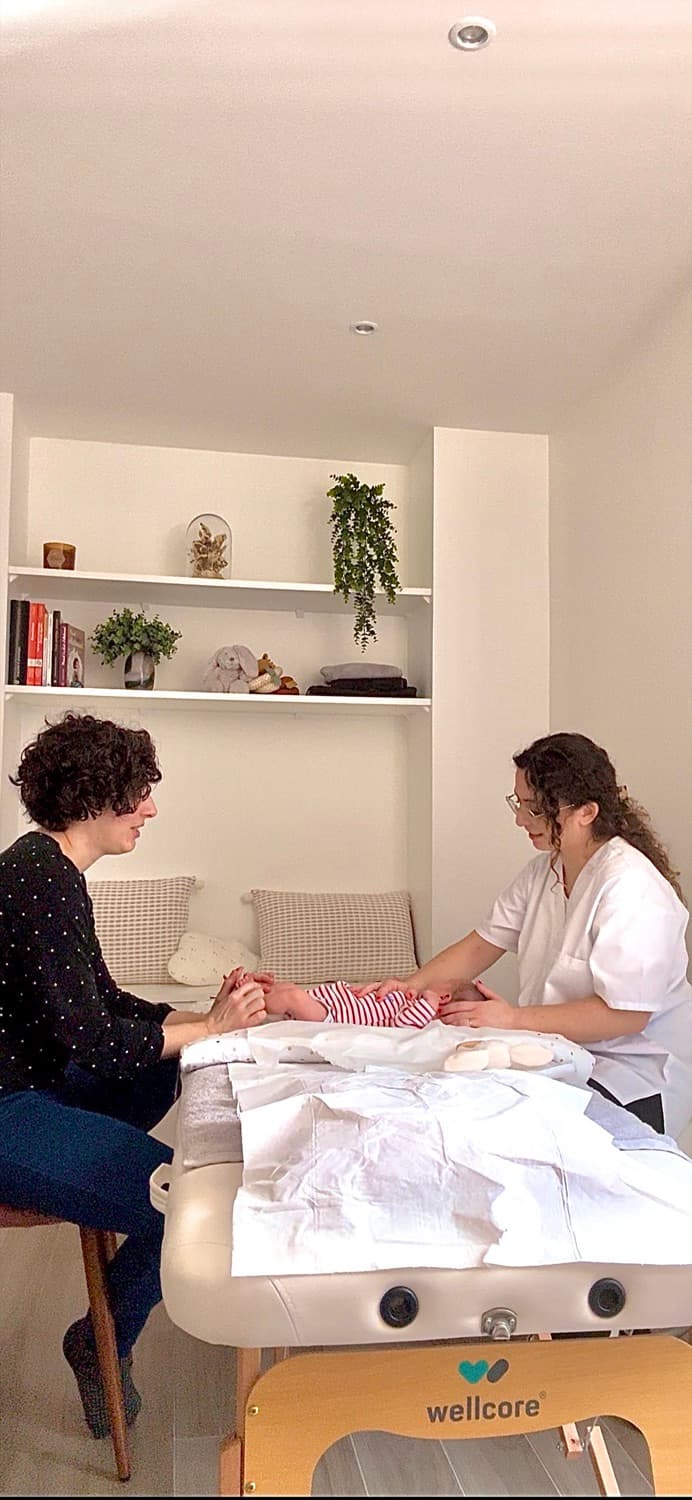
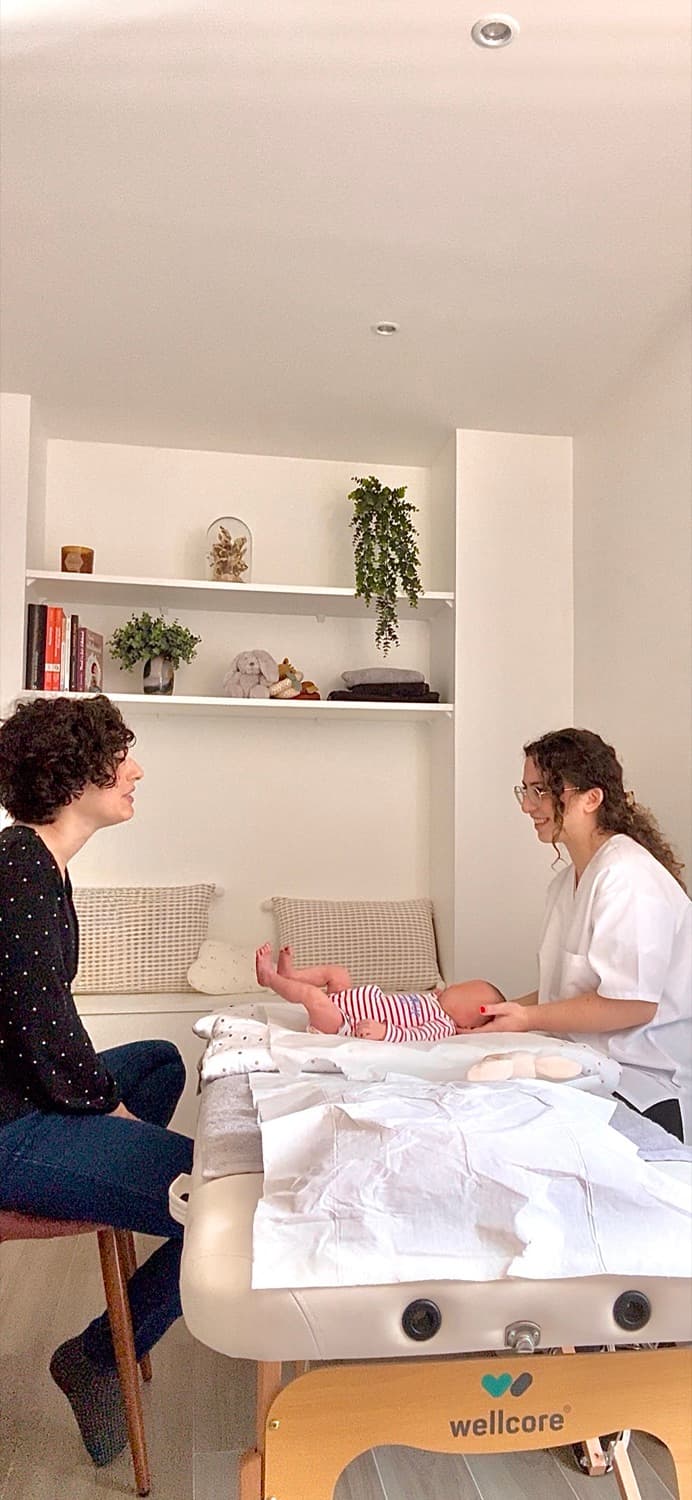
Léa Laskar, Osteopath, supporting a mother and her infant in Jerusalem (Katamon)

Key takeaways

  • Colic is common and harmless: between episodes, a baby with colic feeds well and gains weight normally.
  • There is no miracle cure: tummy massage, babywearing, warmth, and patience all help, and osteopathy can bring relief to some babies as a complement.
  • At the slightest unusual sign (fever, vomiting, blood in the stool, weight loss), the pediatrician comes first.

Baby colic: what are we talking about?

We call it colic when a healthy baby cries a great deal - intense crying that’s hard to console - mostly at the end of the day, with no obvious cause. It usually starts around two to three weeks of age and most often fades by three or four months.

The typical signs

  • Intense crying, often in the late afternoon or evening
  • A baby who squirms, pulls up their legs, clenches their fists
  • A tense tummy, sometimes relieved by passing gas
  • Crying spells that don’t respond to the usual comforting

The most reassuring detail

Between episodes, a baby with colic is doing well: they feed, they sleep, they gain weight normally. That’s precisely what sets colic apart from a problem that would need medical attention - and it’s an important benchmark to keep in mind.

Why does your baby have colic?

Several explanations coexist: a digestive system that’s still immature, air swallowed during feeds, a gut microbiome still taking shape, a sensitivity to the overload of stimulation at the end of the day. No single one of them explains everything on its own.

One thing is certain: this is not your fault. Colic is not a sign that you’re doing something wrong or that your milk isn’t right. For many babies, it’s simply part of those first weeks when everything is still settling into place.

First, rule everything else out: when to see the pediatrician right away

Colic is recognizable precisely because the baby is otherwise doing well. Some signs, however, are not colic and call for prompt medical attention.

See your pediatrician or a doctor if you notice:

  • A fever
  • Repeated, projectile, or greenish vomiting
  • Blood in the stool
  • A drop-off in the weight curve, or a baby who is no longer feeding well
  • A baby who is unusually limp, whiny, or hard to wake, even between episodes

In these situations, osteopathy is not the answer: a doctor needs to see your baby first.

Soothing techniques you can try at home

Tummy massage and “bicycle legs”

Gently massage your baby’s tummy in a clockwise direction, with a warm, resting hand. You can also take their legs and move them in a slow pedaling motion: this sometimes helps move gas along and ease the tummy.

Babywearing and calming positions

Carrying your baby against you, in a wrap, or holding them tummy-down along your forearm (the “airplane hold”) is often reassuring and relaxing. The contact, the movement, and the warmth of your body are genuinely soothing.

Warmth, burping, and the rhythm of feeds

A warm (never hot) water bottle on the tummy, a quiet moment for burping after each feed, a calm environment at the end of the day: these small adjustments matter. If you’re breastfeeding or bottle-feeding and wondering about making a change, talk to your pediatrician first instead of switching your baby’s milk on your own.

Have a question, or ready to book an appointment?

Write to me - I’ll get back to you in English or French, with no obligation.

What a session for your baby actually looks like

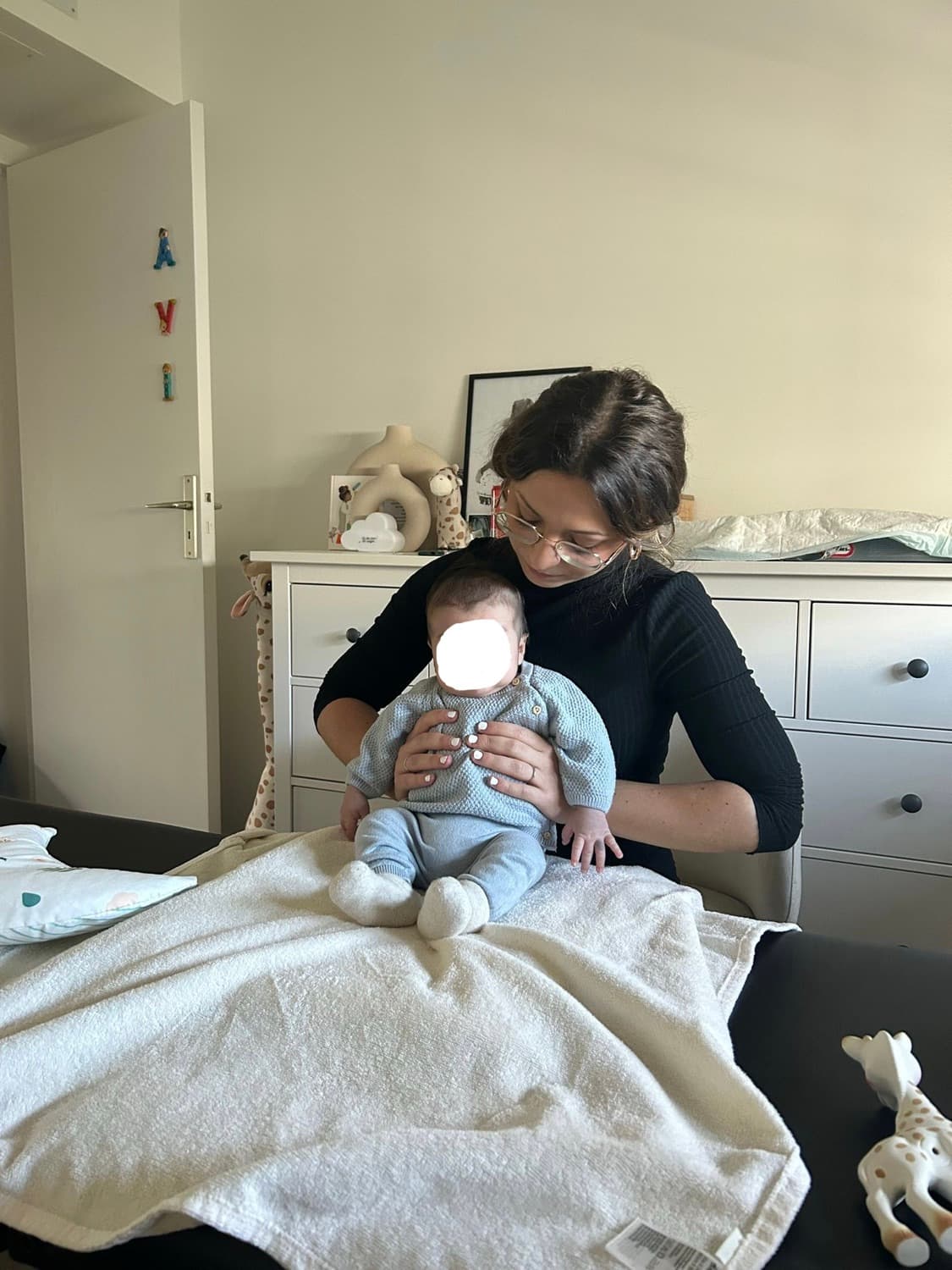
Your baby is settled against you or on the table, in a calm setting. I start by listening to you: how the days unfold, the feeds, sleep, the birth. Then I work gently, wherever I feel tension. You stay by their side from beginning to end.

Often, one or two sessions are enough to take stock. Remember to bring your baby’s health record and, if you have it, the Tipat Halav follow-up booklet: it helps me get the full picture.

And what about you? Holding up through the crying

We talk a lot about the baby, and rarely about how exhausted the parents are. Yet crying that never seems to end wears you down. If the tension is rising, it is not only okay but recommended to put your baby down safely in their crib, leave the room for a few minutes, and breathe. A baby crying in their crib is not in danger; a parent at the end of their rope has every right to catch their breath.

Hand things off whenever you can, and talk about it - with those around you, with your pediatrician, or with me. You are not alone, and this phase, however hard it is, always passes.

In Jerusalem, care in English and in French

At my practice in Katamon, as a French-trained osteopath I see babies from Jerusalem’s English-speaking and international community, in English or in French, with parents present throughout the session and in coordination with your pediatrician and Tipat Halav. If your baby’s crying is wearing you out and you’re wondering whether a session could help, send me a message: we’ll talk it over simply, with no obligation.

Frequently asked questions

Your questions, my answers

From what age can I bring my baby in for colic?

From the very first weeks, if the crying and discomfort worry you. My techniques are adapted to a newborn’s fragility. If there’s any doubt about another cause, I’ll refer you to your pediatrician.

How many sessions does it take?

Often one or two sessions are enough to take stock. We assess things together from the very first visit, and we don’t pile on unnecessary appointments.

Is it painful or risky for my baby?

No. With an infant, I use only light pressure, with no abrupt manipulation of any kind. Most babies are relaxed, and many fall asleep during the session.

Should I see the pediatrician before the osteopath?

Colic is recognizable by the fact that the baby is otherwise doing well. If there is fever, vomiting, blood in the stool, or weight loss, the pediatrician needs to see your baby first. In all other cases, osteopathy comes as a complement to their medical care.

Léa Laskar, Osteopath D.O. in Jerusalem (Katamon)

Léa Laskar, Osteopath D.O.

A graduate of the Institut Dauphine d’Ostéopathie (IDO Paris), licensed by the Israeli Ministry of Health. I care for women, babies, and children in Jerusalem (Katamon), in English and French. Learn more about my background.

This article is intended for information only and is not a substitute for medical advice. If you have any doubts or a worrying symptom, please see your doctor.

Ready to book your appointment?

Message me on WhatsApp or through the contact form: I’ll be happy to get back to you and find a time that works.