Women’s health osteopathy
Urogynecology · Perinatal care · Postpartum
I’m Léa Laskar, a French-trained Osteopath D.O. in Jerusalem (Katamon), and I see patients in both English and French, welcoming women from the city’s English-speaking and international community. Women’s health makes up the largest part of my practice: from adolescence to menopause, through pregnancy and postpartum, I tailor every session to what your body is going through at that particular moment.
Before I ever place my hands, I take the time to listen and understand your story. My goal is simple: to ease your tension, respect your privacy and your pace, and offer care that truly makes sense for you.
When should you see an osteopath for women’s health?
- Painful periods and other menstrual pain
- Pain related to endometriosis or PCOS
- Fertility concerns and support through your fertility journey
- Digestive discomfort: constipation, reflux, bloating
- Back pain, neck pain, pelvic pain, and sciatica
- Headaches and jaw pain
- Urinary issues and pelvic floor discomfort
- Pain during pregnancy and recovery after childbirth
Urogynecology
Many gynecological conditions come with tension in the structures of the pelvis. By working on the mobility of the pelvis, lower back, and abdominal organs, osteopathy helps ease discomfort and restore a better balance.
Endometriosis, in particular, often brings pelvic pain that weighs on daily life. Osteopathy does not treat the disease itself, but it can help release pelvic tension and make painful episodes easier to get through, always in coordination with your gynecologist. I explain what sessions can offer when you have endometriosis in a dedicated article.
This work never replaces your medical care. It comes as a complement, in coordination with your gynecologist or midwife, and I refer you back to them whenever needed.
- Painful periods (dysmenorrhea)
- Pain during intercourse
- Pain related to endometriosis or PCOS
- Urinary discomfort and pelvic heaviness
- Support during fertility treatment
During pregnancy
In just a few months, pregnancy reshapes the body: the pelvis adapts, the center of gravity shifts, and the organs rearrange themselves to make room. These changes sometimes bring pain and stiffness that respond well to gentle, gradual work.
I use slow, gentle movements - no forceful manipulation - to support you from one trimester to the next. The goal is to help you move through this period with more ease and prepare your pelvis for childbirth. Wondering when to book? I walk you through when to see an osteopath during pregnancy, trimester by trimester.
- Back pain, pelvic pain, and sciatica
- Reflux, heartburn, and constipation
- Restricted breathing, feeling short of breath
- Pubic pain
- Preparing the pelvis for childbirth
The postpartum period
The birth is behind you, and your baby is in your arms. Your body needs support to recover, too. The postpartum period is a pivotal time, yet it is too often overlooked.
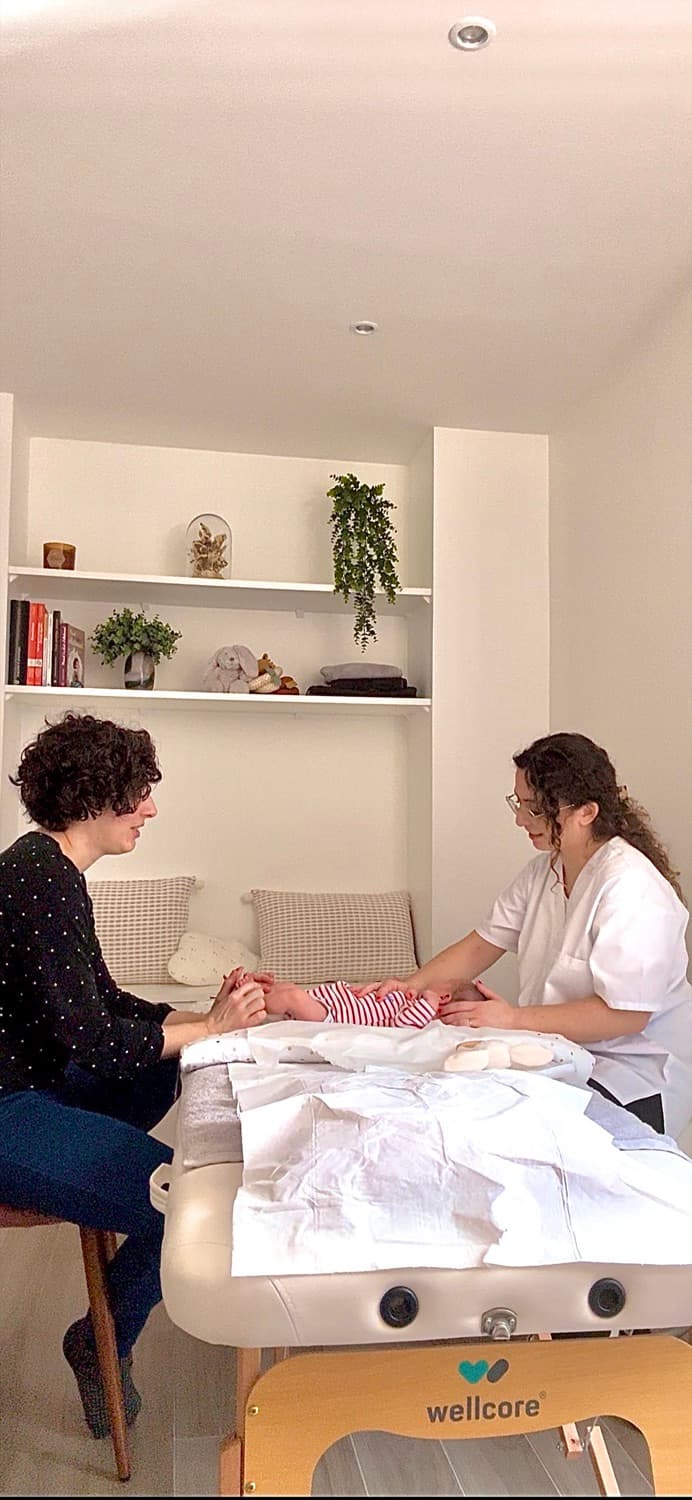
Sessions help release the tension left by childbirth, restore mobility to the pelvis, and bring more comfort to everyday movements, alongside pelvic floor rehabilitation. And if your baby needs care too, I see infants from their very first days. I also offer 90-minute mom-and-baby sessions, so I can care for both of you in a single appointment.
- Pelvic and back pain after childbirth
- Perineal discomfort (alongside pelvic floor rehabilitation)
- C-section recovery and scar comfort
- Fatigue and tension from carrying your baby and breastfeeding
What to expect during a session
We begin with a conversation: what brings you in, your medical history, and any care you’re currently receiving. This discussion helps me pinpoint what’s bothering you and make sure osteopathy is appropriate for you.
Then comes the examination, followed by the treatment itself, using measured, gradual techniques. As we go, I explain what I feel and what I’m doing. Before you leave, we take a moment to review the session and, if needed, plan the next steps. Sessions are held in English or French - whichever you prefer.
- A detailed conversation at the start of your session
- Techniques suited to your condition that day
- Clear explanations at every step
- A recap and advice at the end of your appointment
What this care brings you
- Gentle sessions that respect your privacy
- Genuine, judgment-free attention
- Care designed for every stage of your life as a woman
- An approach that complements your medical care
You might be wondering
Why should women see an osteopath?
For painful periods, pain related to endometriosis or PCOS, digestive issues, back, pelvic, or jaw pain, or support through pregnancy and postpartum.
Can osteopathy help with endometriosis or painful periods?
It does not cure the disease, but it can help release pelvic tension and make the pain easier to live with, alongside your gynecological care.
When can you start seeing an osteopath during pregnancy?
You can come in as early as the first trimester, with gentle techniques adapted to each stage. In practice, many women come during the second trimester, when back and pelvic pain tends to set in.
Does osteopathy replace pelvic floor rehabilitation?
No. My work complements the pelvic floor rehabilitation led by a midwife or physical therapist. The two approaches move forward together, each in its own role.
When should you see an osteopath after giving birth (postpartum)?
Whenever you feel ready - generally from the third or fourth week on, and after your postnatal checkup. The timing adjusts if you had a C-section.
Can osteopathy help with PCOS or pain during intercourse?
It does not act on the hormonal cause of PCOS, but it can help release the pelvic and abdominal tension that comes with this pain. The work is gentle and always external, complementing your gynecological care.
My advice on this topic
PregnancyOsteopathy and Pregnancy: When Should You See an Osteopath?
From the first trimester, or later? Trimester-by-trimester guidance on when osteopathy can support you during pregnancy - and when it isn’t the right place to turn.
Read the article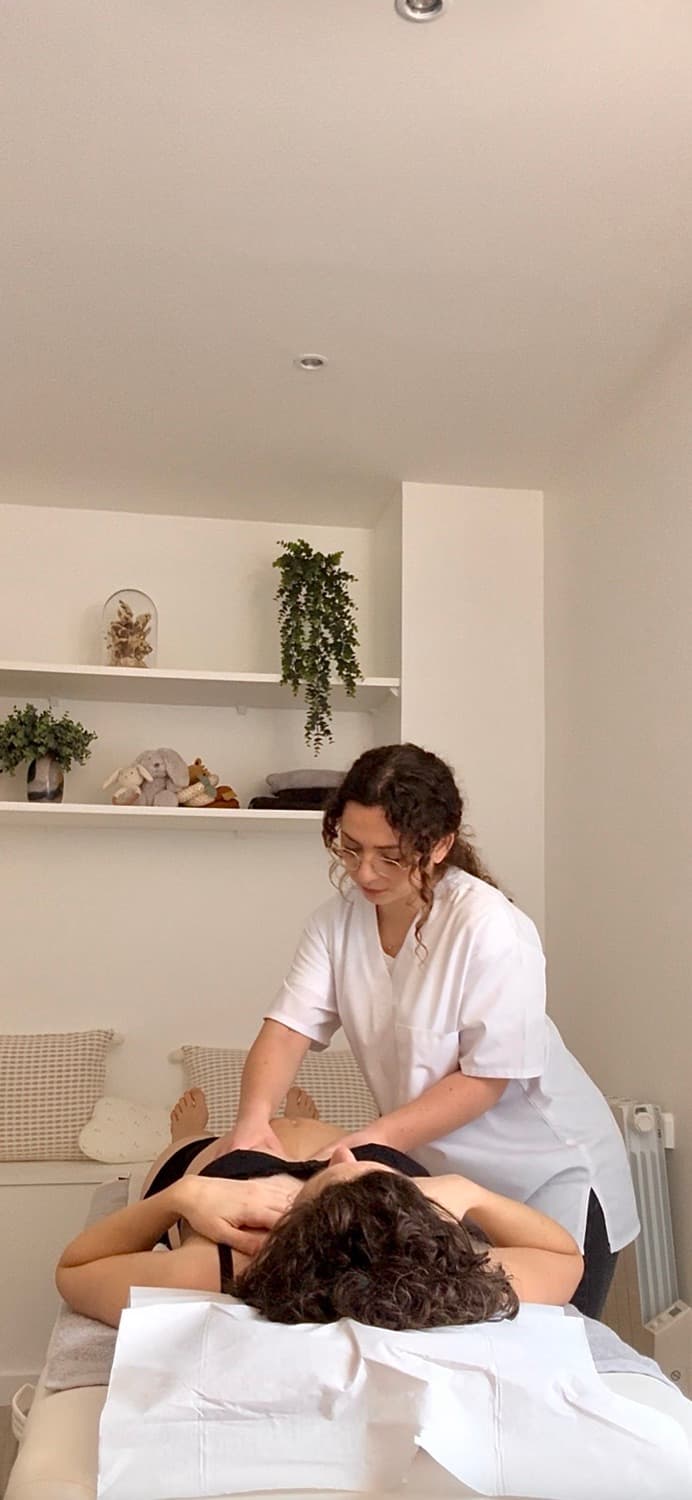 Women’s health
Endometriosis and Osteopathy: What a Session Offers
Osteopathy doesn’t treat endometriosis. But alongside your medical care, it can help ease some of the pain and make daily life more manageable. Here’s what a session offers - honestly.
Read the articleOther treatments
Baby & child osteopathy
Infants · Children
Sessions designed for the very youngest: flat head syndrome (plagiocephaly), colic, restless sleep, the after-effects of birth, with techniques adapted to their fragility.
Learn moreLymphatic drainage
Lightness, restored circulation, renewed comfort
A precise, rhythmic manual massage that stimulates lymphatic circulation, helps your body eliminate excess fluid, and leaves you with a real feeling of lightness.
Learn moreMy patients’ trust
Reviews from Google. Scroll to read more. Reviews translated from French.
Ready to book your appointment?
Message me on WhatsApp or through the contact form: I’ll be happy to get back to you and find a time that works.