Skip to content
Baby & child

Flat Head Syndrome (Plagiocephaly) in Babies: When Should You See an Osteopath?

By Léa Laskar, Osteopath D.O.Updated on June 18, 20269 min read

You’ve noticed the back of your baby’s head flattening on one side, or that they always turn their head the same way. It’s a very common worry, and most often a harmless one: an infant’s skull is soft and moldable, and a positional deformation affects neither the brain nor your baby’s development.

Here’s how to recognize flat head syndrome, and what you can start doing at home right now to help your baby.

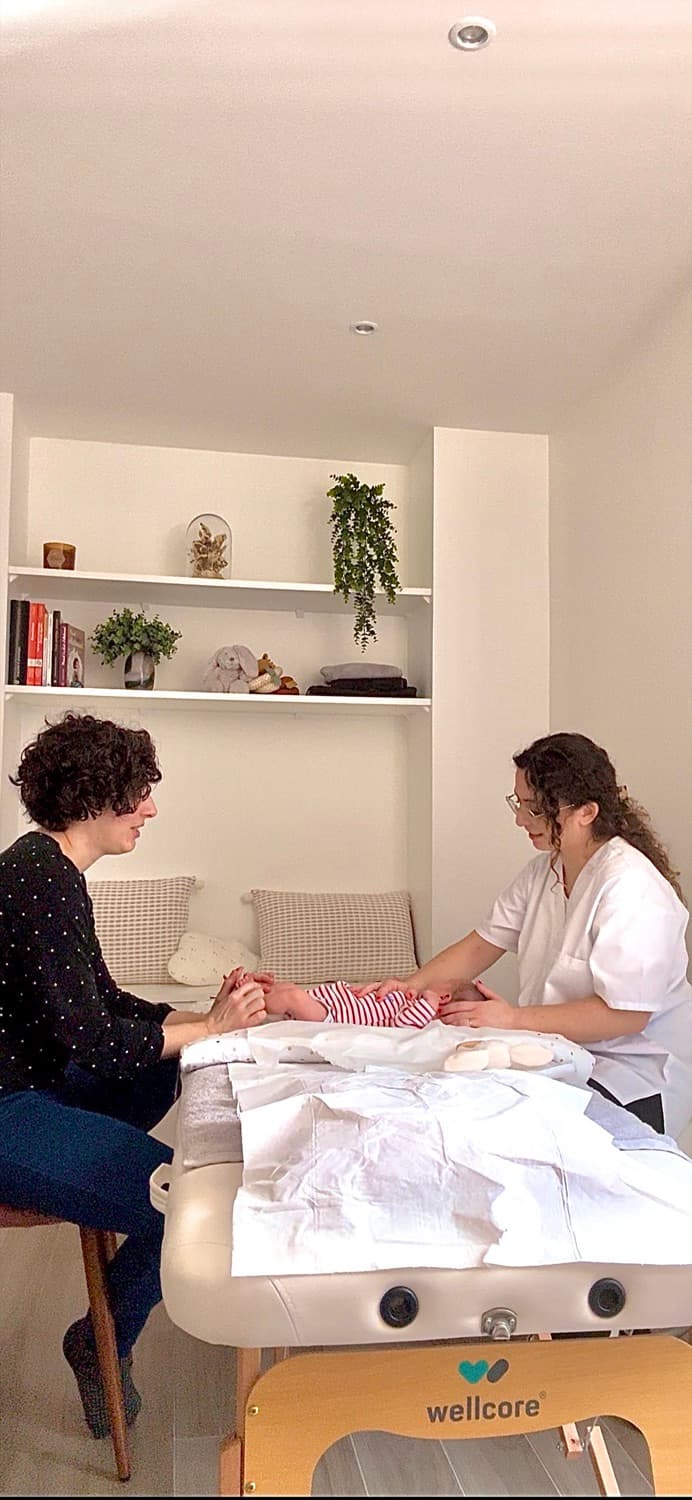
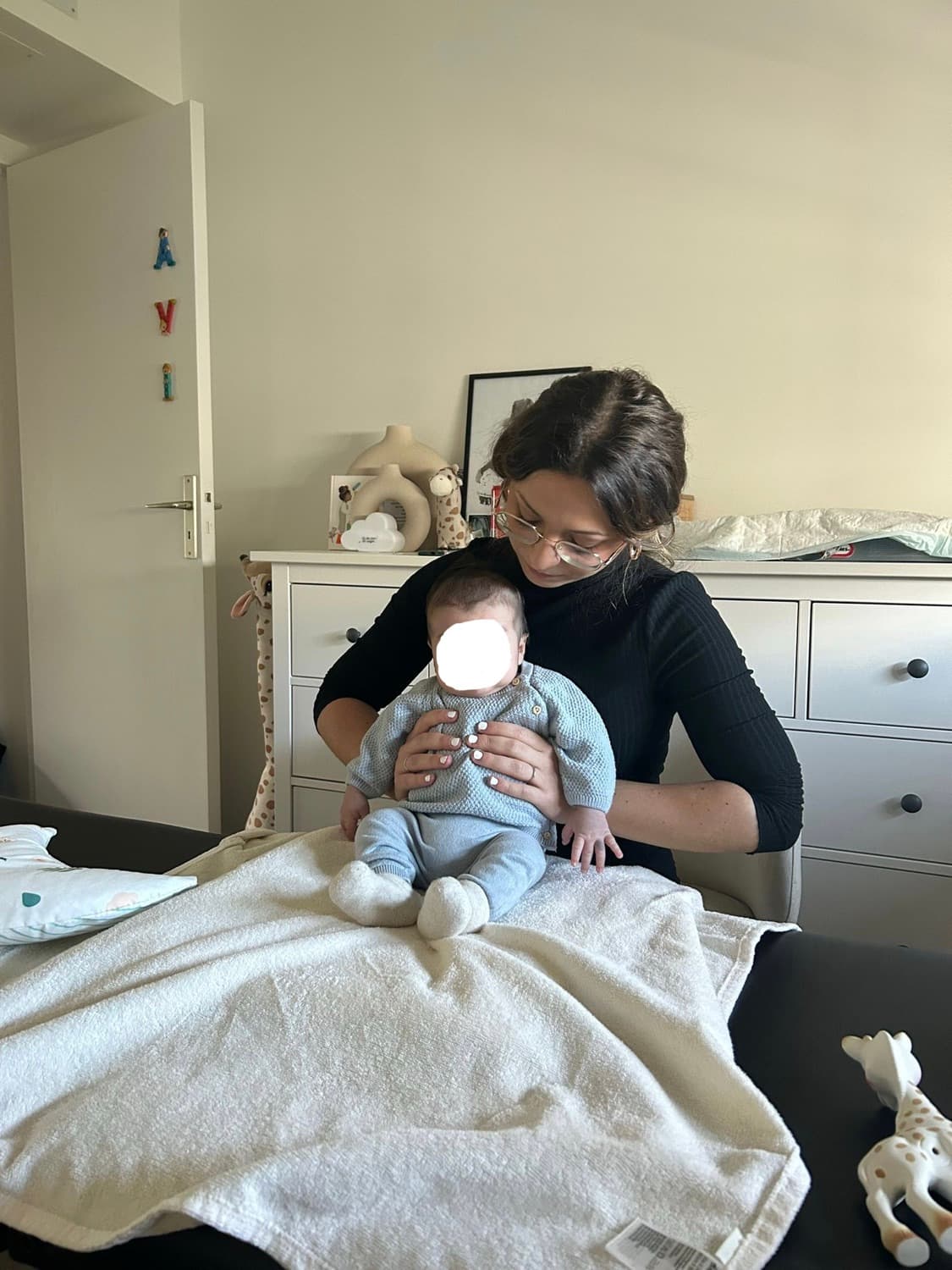
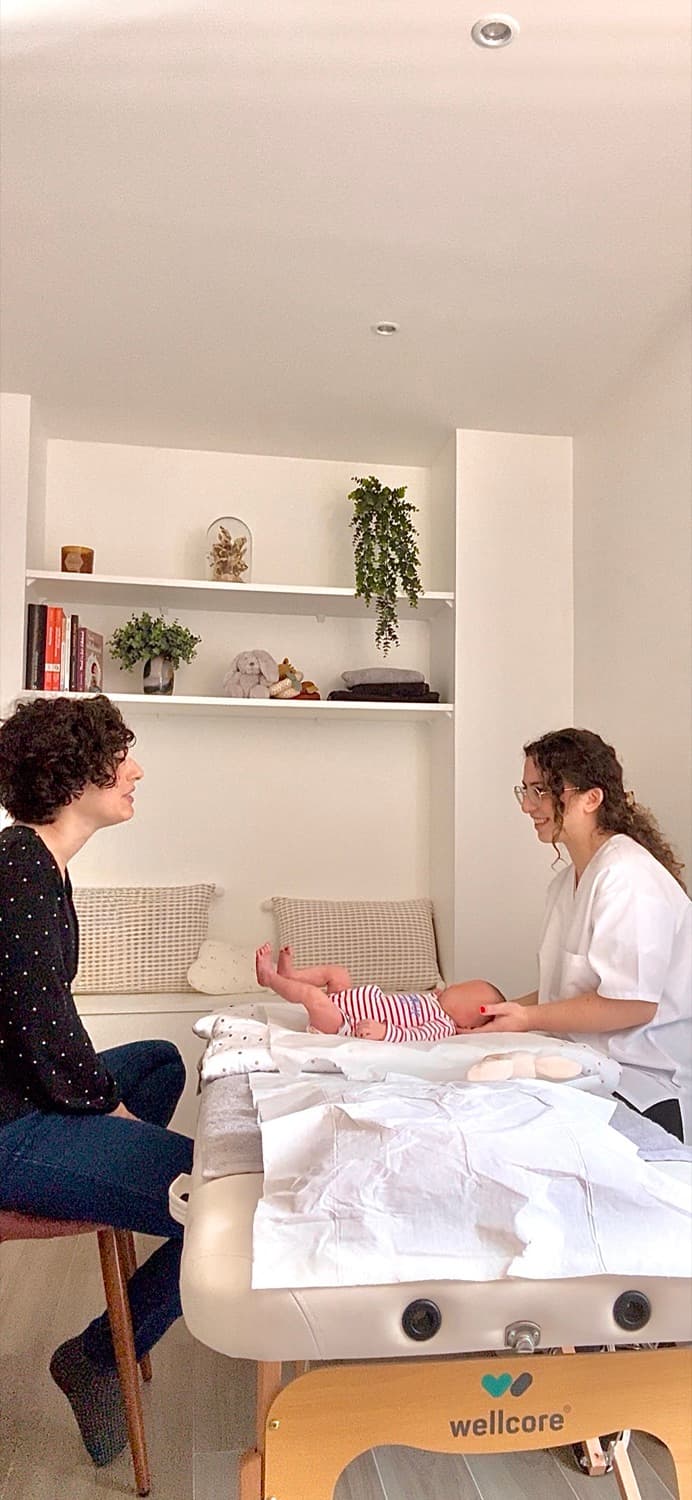
Léa Laskar, Osteopath, during a gentle session with an infant in Jerusalem (Katamon)

Key takeaways

  • Positional flat head is common and harmless.
  • Your first move: vary positions during the day, and keep putting your baby to sleep on their back.
  • Osteopathy can help as a complement (neck mobility, torticollis), never as a replacement for your pediatrician’s care.

Flat head in babies, in a nutshell

We talk about positional plagiocephaly when a baby’s skull flattens in one spot from resting in the same position again and again. It has become more common since babies started sleeping on their backs - an essential safety measure that has dramatically reduced sudden unexpected infant death, and one you should absolutely not give up.

Plagiocephaly, brachycephaly: what’s the difference?

Plagiocephaly is a flattening on one side of the back of the skull: seen from above, the head takes on a slight parallelogram shape. Brachycephaly is a symmetrical flattening across the whole back of the head, which makes the head look wider. In both cases, it’s a position-related deformation, not a problem with the bone itself.

Why the skull flattens

Several factors often combine: your baby’s preferred sleeping position, a slightly stiff neck that keeps them looking the same way (a torticollis), time spent in bouncers, infant seats, and car seats, or a particular position during pregnancy.

How do you recognize flat head syndrome?

The best vantage point is from above, looking down at your baby’s head. A few things to look for:

  • One side of the back of the skull flatter than the other
  • A baby who almost always turns their head to the same side

What to do at home at the first signs

Everyday habits are what make the biggest difference, especially when you start early. The general idea: reduce pressure on the same spot, and encourage your baby to turn their head both ways.

At night: always on the back, and nothing in the crib

Keep putting your baby to sleep on their back: that’s the essential safety rule. No pillows, no “anti-flat-head” positioners - these devices carry a suffocation risk and are not recommended. What you can do is alternate the direction you lay your baby down, so they spontaneously turn their head to one side and then the other.

During the day: tummy time, under your watchful eye

When your baby is awake and supervised, place them on their tummy several times a day, starting in the very first weeks, a few minutes at a time. Tummy time strengthens the neck and takes pressure off the back of the skull. Vary the stimulation too: change the side you place toys on, switch the arm you carry your baby with, and favor babywearing over the bouncer.

Nursing, bottles, diaper changes: the little habits that count

Remember to alternate sides during breastfeeding or bottle-feeding, and to position your face sometimes to the right, sometimes to the left during diaper changes. Limit time spent in infant seats and car seats outside of car rides. These tiny adjustments, repeated every day, are often what helps most.

Have a question, or ready to book an appointment?

Write to me - I’ll get back to you in English or French, with no obligation.

Torticollis, flat head’s quiet companion

Very often, a flat head comes with a slightly stiff neck: the baby turns their head more easily to one side, nurses better on one breast, or always tilts their head the same way. Spotting this torticollis matters, because as long as it persists, the pressure stays on the same side and the head has a hard time rounding out. This is precisely one of the areas where infant osteopathy can help, alongside positioning advice.

At what age should you seek help? The window that matters

The earlier you act, the more effective it is, because the skull takes its shape mostly during the first months, while it’s growing fast. From the very first weeks, if you notice a flat spot or a stiff neck, that’s the right time to start varying positions and ask for a professional opinion. A cranial helmet remains an exceptional measure, decided by specialized teams - never a first step.

In Jerusalem: a French-trained osteopath for English-speaking parents

At my practice in Katamon, I welcome babies from Jerusalem’s English-speaking and international community, with sessions in English or French and parents present the whole time. I work hand in hand with your pediatrician and Tipat Halav. If the shape of your baby’s head is on your mind, send me a message: we’ll look at it together, calmly, and see what can help.

Frequently asked questions

Your questions, my answers

Will my baby’s flat head correct itself on its own?

It often improves markedly with position changes, especially when you start early. The skull remodels itself during the first months. When a torticollis or a stiff neck keeps the pressure on one spot, some support (positioning, physical therapy, osteopathy) helps get things moving again.

Should I keep putting my baby to sleep on their back?

Yes, absolutely. Back sleeping remains the essential safety rule for preventing sudden unexpected infant death. Flat head is addressed during the day (awake tummy time, babywearing, varied positions), never by changing the sleep position.

Are “anti-flat-head” pillows a good idea?

No. Pillows and head positioners carry a suffocation risk and are not recommended. The crib should stay empty. It’s better to vary positions during the day and alternate the direction you lay your baby down.

At what age should I bring my baby to the osteopath for a flat head?

From the very first weeks, if you notice a flat spot or a stiff neck. The earlier the intervention, the more useful the mobility work, as a complement to positioning advice and your pediatrician’s care.

What is the link between torticollis and flat head syndrome?

A stiff neck makes a baby turn their head to the same side over and over: the pressure concentrates in one spot and the head flattens. Spotting and addressing this torticollis is often the key to letting the head round out again.

Léa Laskar, Osteopath D.O. in Jerusalem (Katamon)

Léa Laskar, Osteopath D.O.

A graduate of the Institut Dauphine d’Ostéopathie (IDO Paris), licensed by the Israeli Ministry of Health. I care for women, babies, and children in Jerusalem (Katamon), in English and French. Learn more about my background.

This article is intended for information only and is not a substitute for medical advice. If you have any doubts or a worrying symptom, please see your doctor.

Ready to book your appointment?

Message me on WhatsApp or through the contact form: I’ll be happy to get back to you and find a time that works.